The Surf Zone MPA Monitoring Project
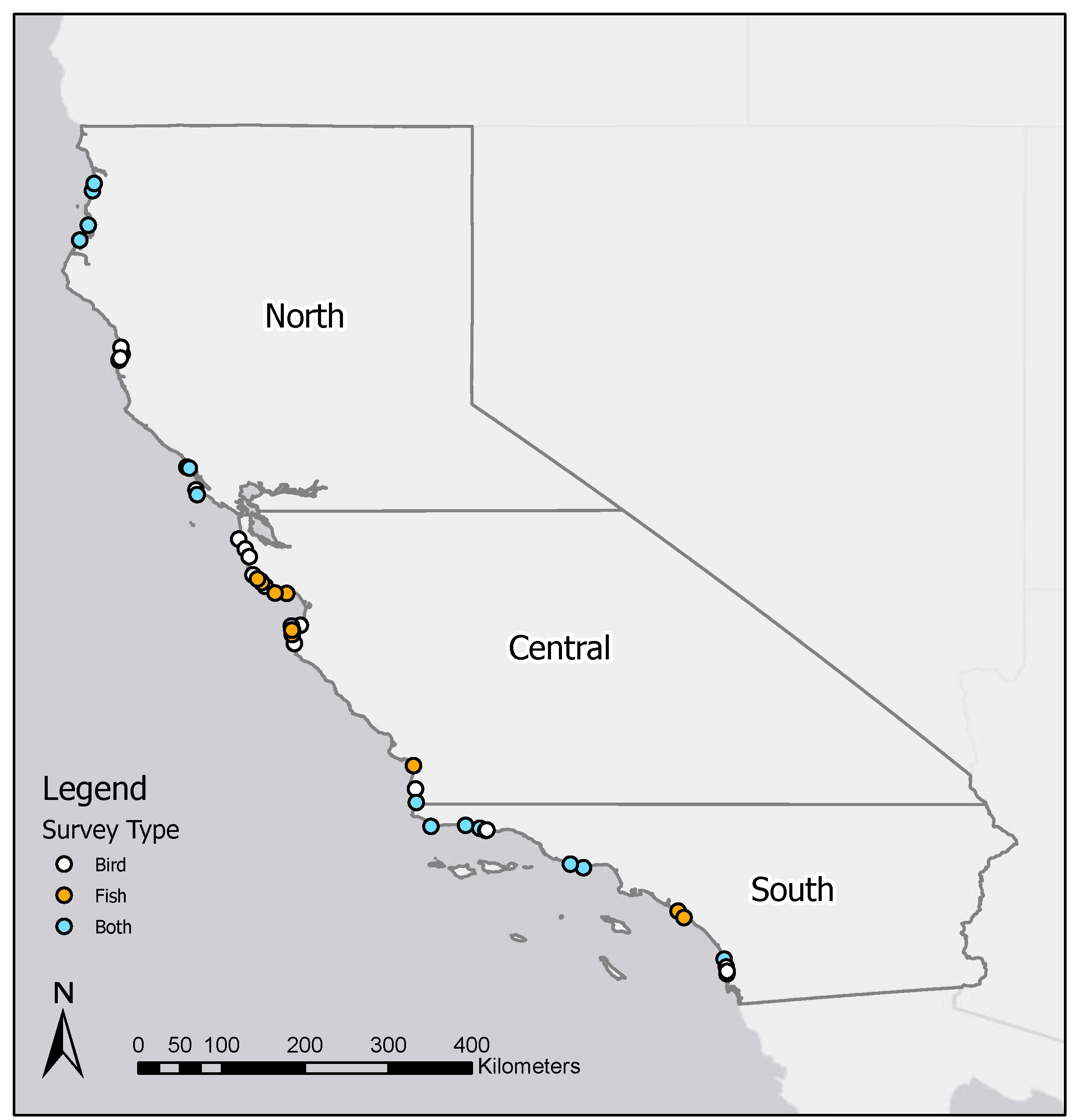
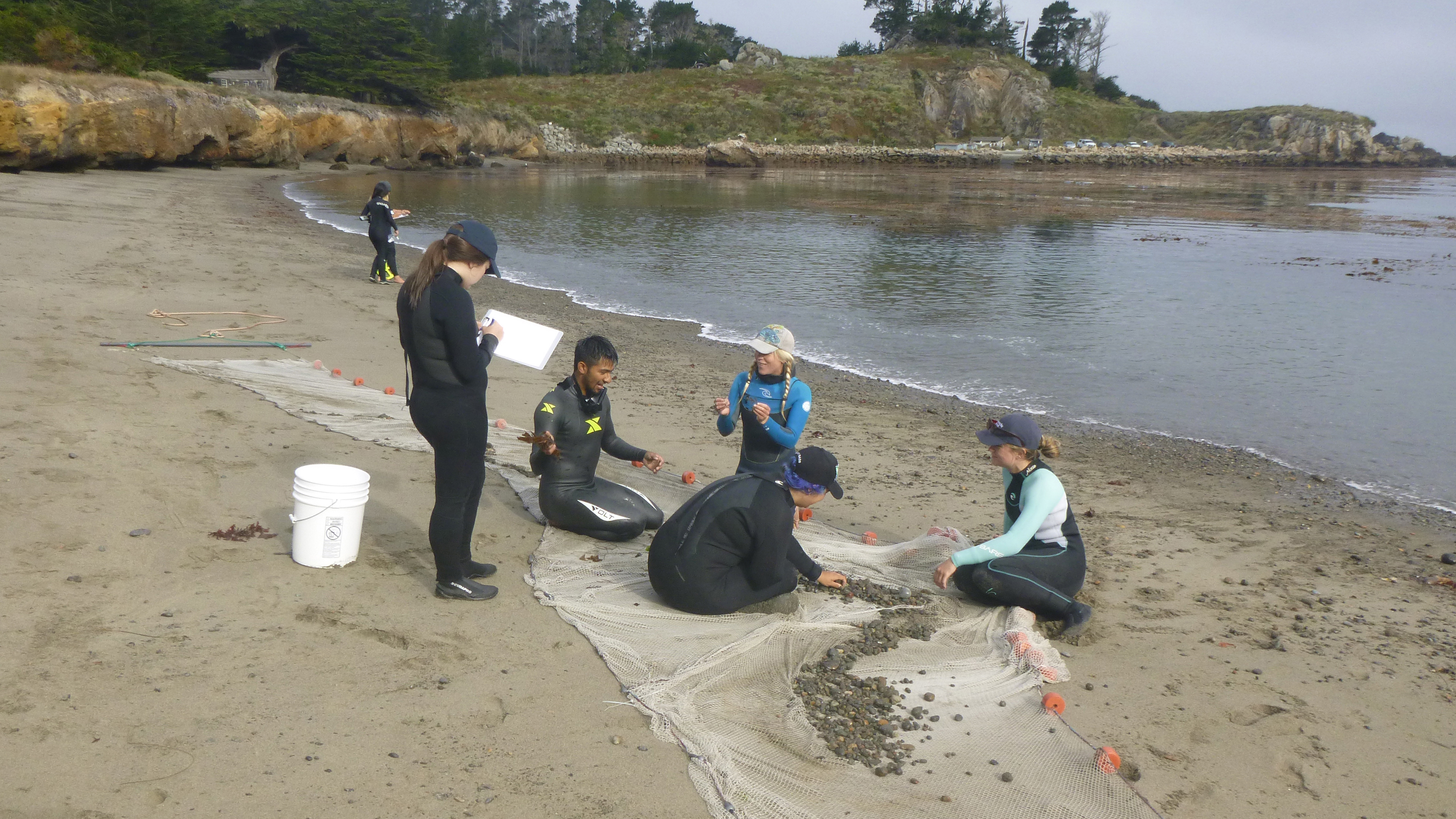
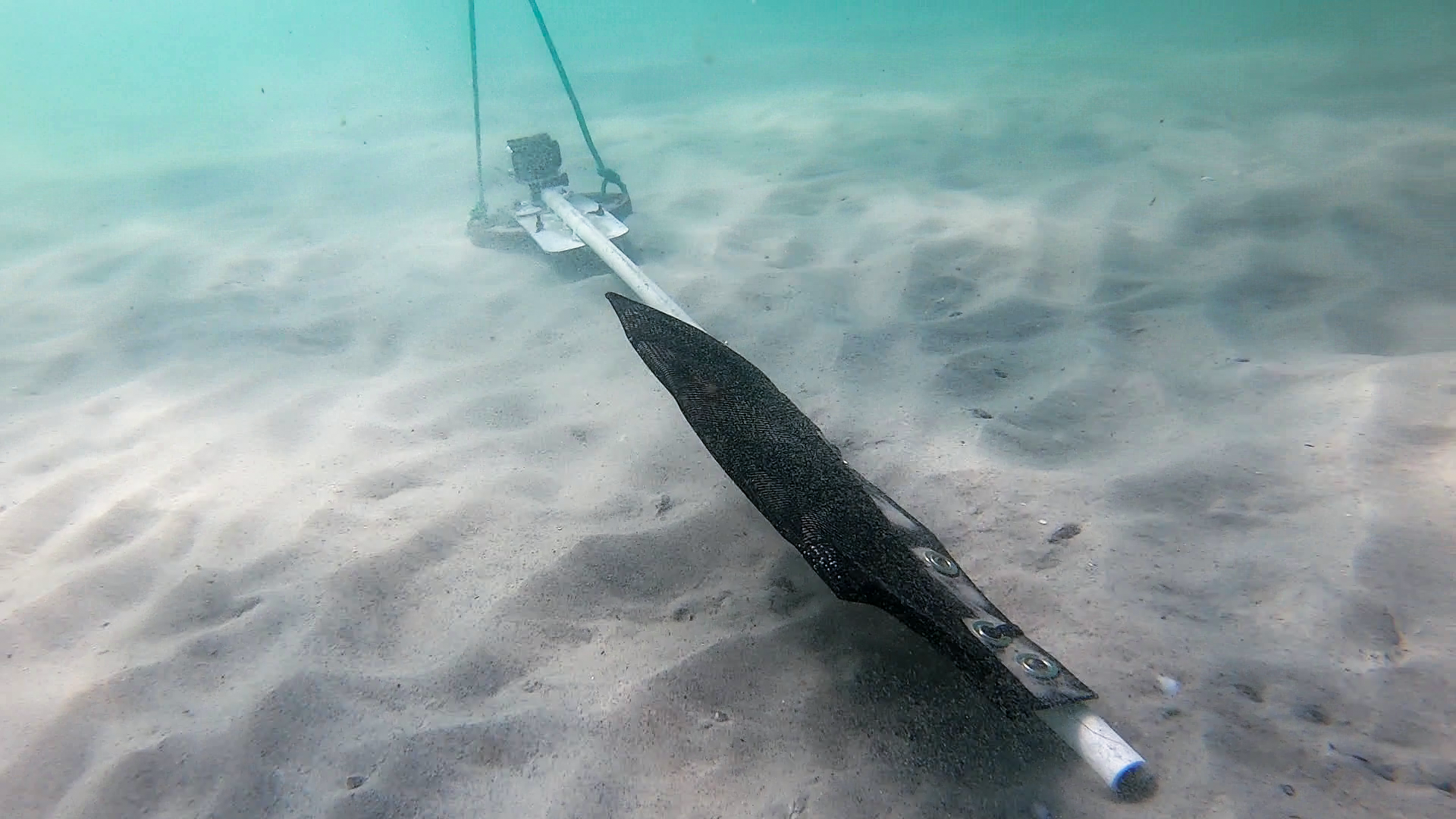
From 2019 to 2021, I helped lead the surf zone marine protected area (MPA) monitoring project. The goal of the project is to assess the impact of MPAs on the surf zone and beaches. California has a large number of MPAs, but they weren't originally designed for conserving the surf zone and no one has previously investigated this interaction in California. The state-funded project is a collaboration of three institutions: University of California - Santa Barbara, Moss Landing Marine Laboratories, and Humboldt State University. The project is broken into a few separate components which include performing beach profiles to look at physical factors of how the beaches differ, investigating the bird populations on the beach by counting the total amount of each species seen, and observing the species of fish and amount algae present in the surf. To quantify the fish, we use both a seine net and baited remote underwater video stations (BRUVS). A seine is a large net that is dragged in parallel to shore to capture fish. All the fish are identified, their length is measured, and they are released back to the ocean. The algae that we drag in on the beach is also classified by species and weighed. The BRUVS consist of a GoPro camera mounted on a weight with a small amount of squid bait situated in front of the camera. Each BRUVS is placed behind the breaking waves in the surf and left to record for an hour before being retrieved. The video is watched at a later date and all species of fish and invertebrates identified are recorded.
My Thesis
After leading the first year of sampling for the surf zone project, I decided to continue part of the project as the thesis for my master's degree. I chose to continue deploying the BRUVS throughout the year at four beaches in Monterey and focus on how the fish and invertebrate species of the surf zone change throughout the year. My thesis answers three questions: how does the assemblage change throughout the year, do MPAs impact the assemblage throughout the year, and which environmental variables are the biggest drivers for the species seen.
Question 1: How does the surf zone assemblage change seasonally?
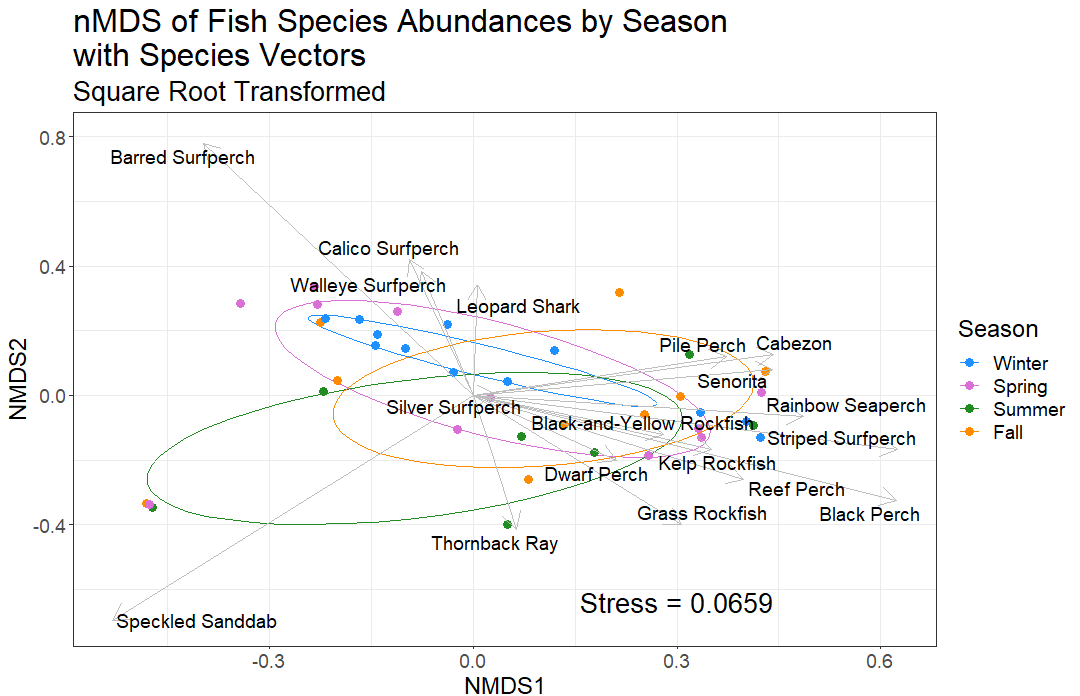
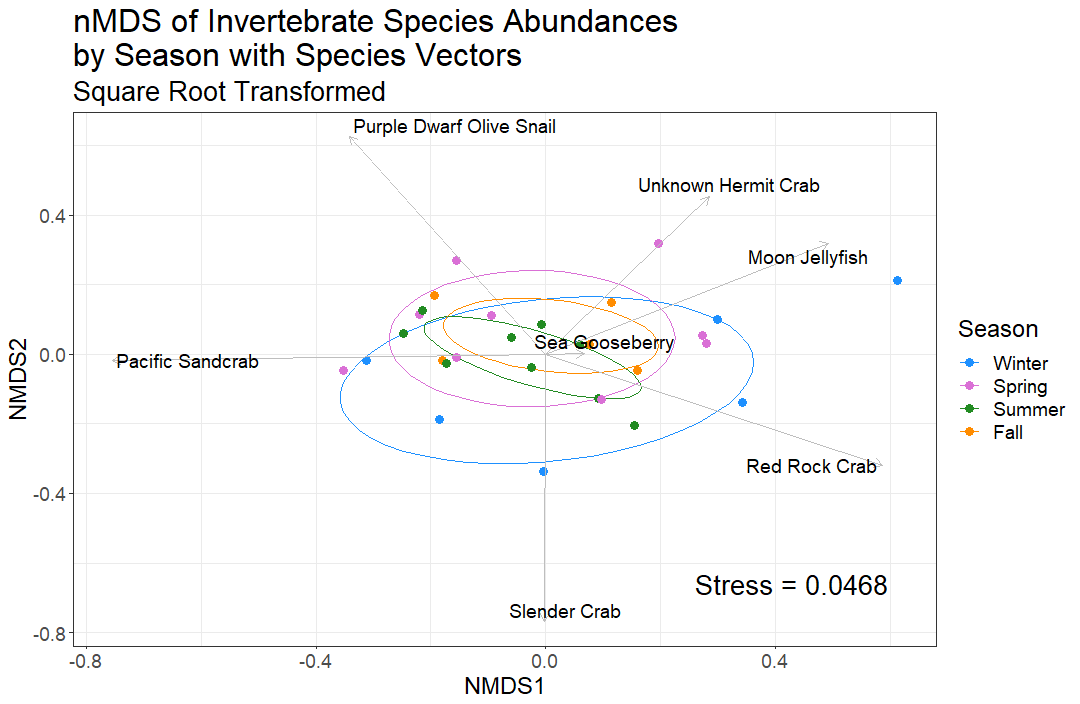
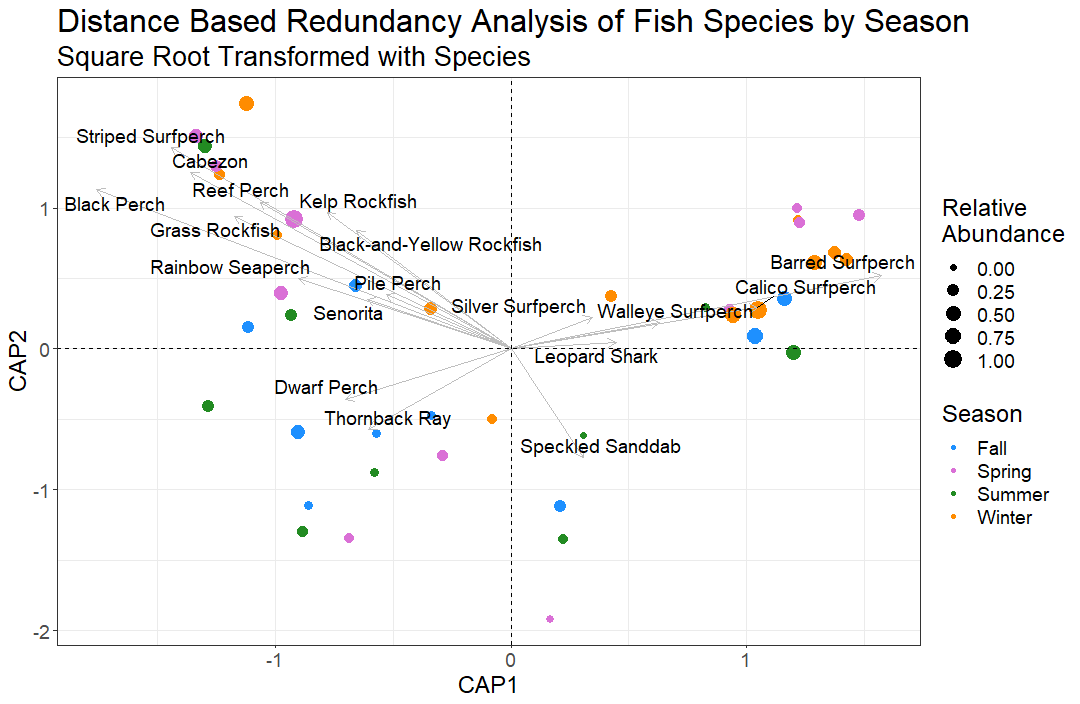
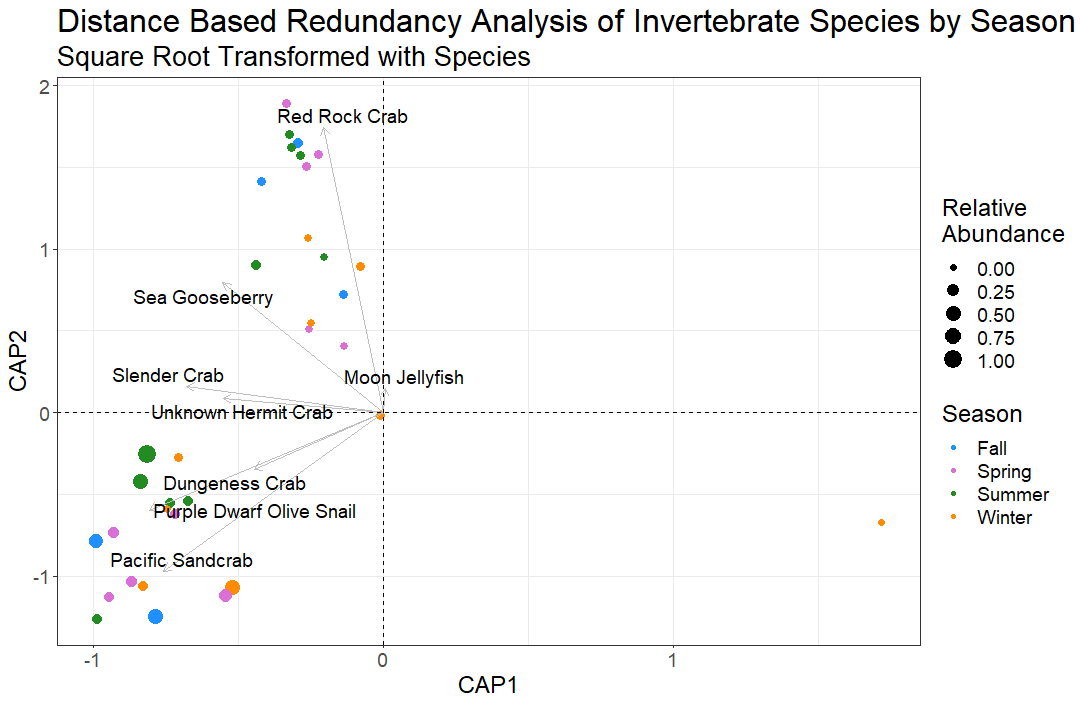
I'm still in the process of finalizing my analysis, but preliminary results show that there are some unique trends for fish and invertebrate surf species throughout the year. All stats were performed in R using the vegan package. I analyzed the data using a non-metric multidimensional scaling analysis. This is an ordination method that calculates a dissimilarity matrix of all the data, so it compares the number of species and individuals of each species from each sampling day and determines how similar or dissimilar each sampling day was. Given how mobile fish species are compared to invertebrate species in the surf zone, I chose to analyze the two groups separately. For fish species, three surf perch species (the barred surfperch, the calico surfperch, and the walleye surfperch) along with the leopard shark were more common in the winter and spring, while the speckled sanddab was more common in the summer. Looking at invertebrate species, the slender crab and red rock crab were more common in the winter. Being able to identify these associations with species and seasons was an informative analysis.
Question 2: How does the surf zone assemblage differ between no-take MPAs and reference locations and across multiple seasons?
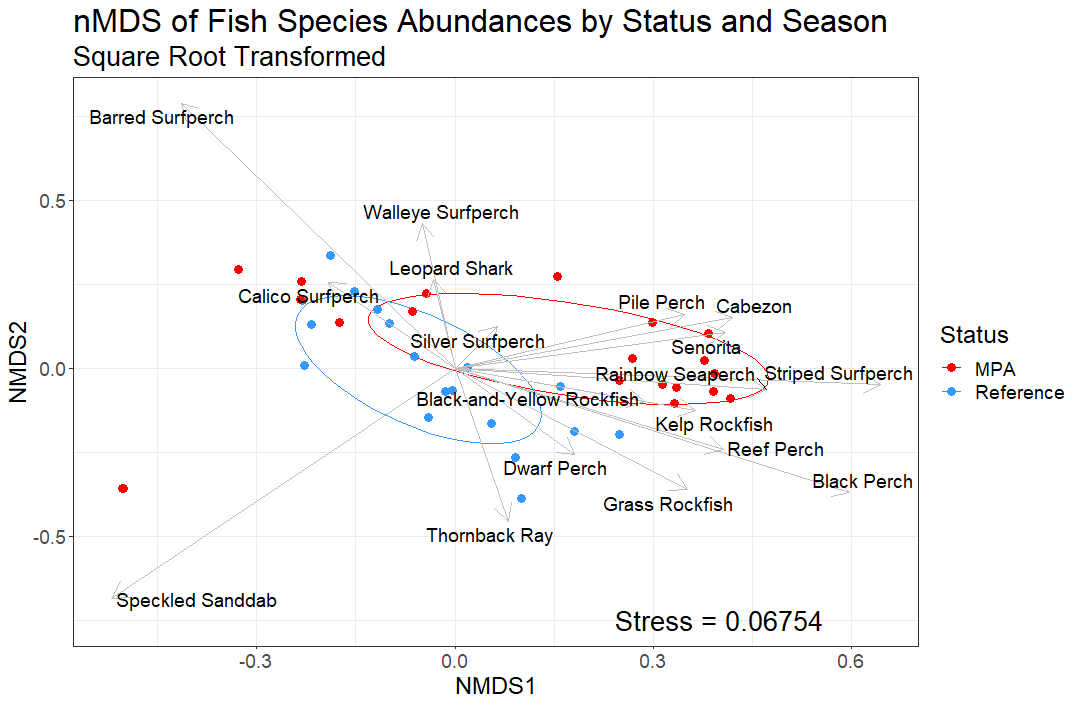
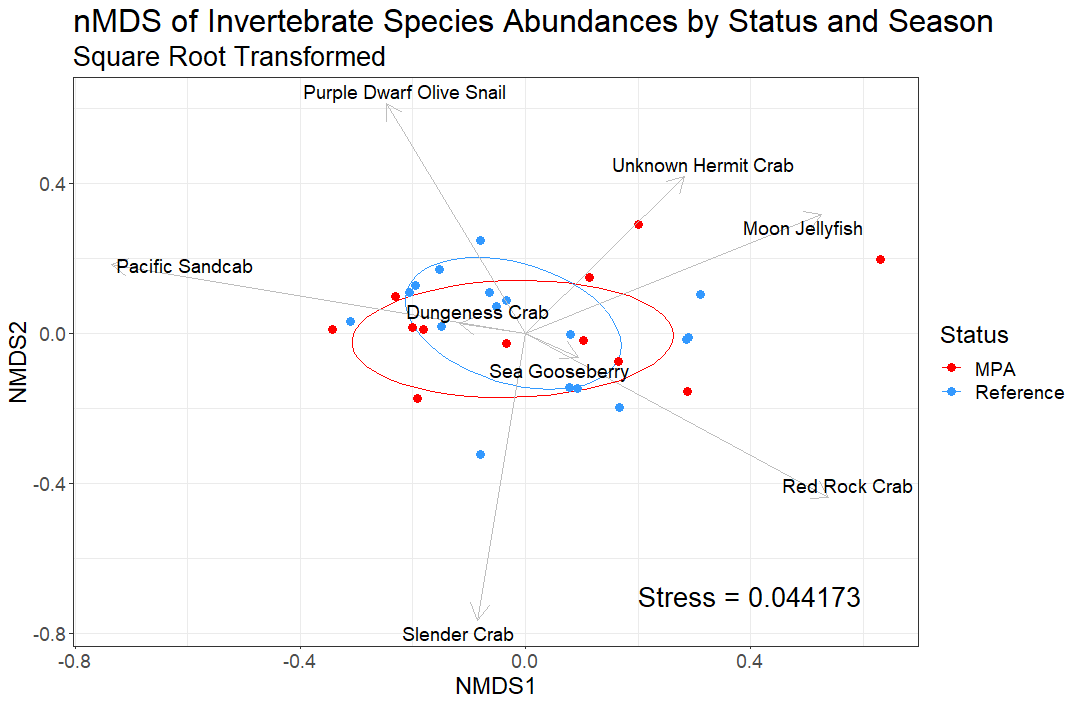
Question 2 analyzed the same data as question 1, but this time focusing on the effect of MPAs. I once again analyzed fish and invertebrate data separately and repeated a similar nMDS analysis. For surf zone fish, there was an impact of MPAs. Certain species like walleye surfperch, leopard sharks, silver surfperch, pile perch, cabezon, señoritas, striped surfperch, rainbow surfperch, kelp rockfish, reef perch, and black perch were more common within MPA sites, while speckled sanddabs, thornback rays, dwarf perch, and grass rockfish were more common at reference sites. MPAs didn't have an impact on invertebrate species.
Question 3: Are there specific environmental factors associated with spatial and temporal differences in surf zone assemblages?
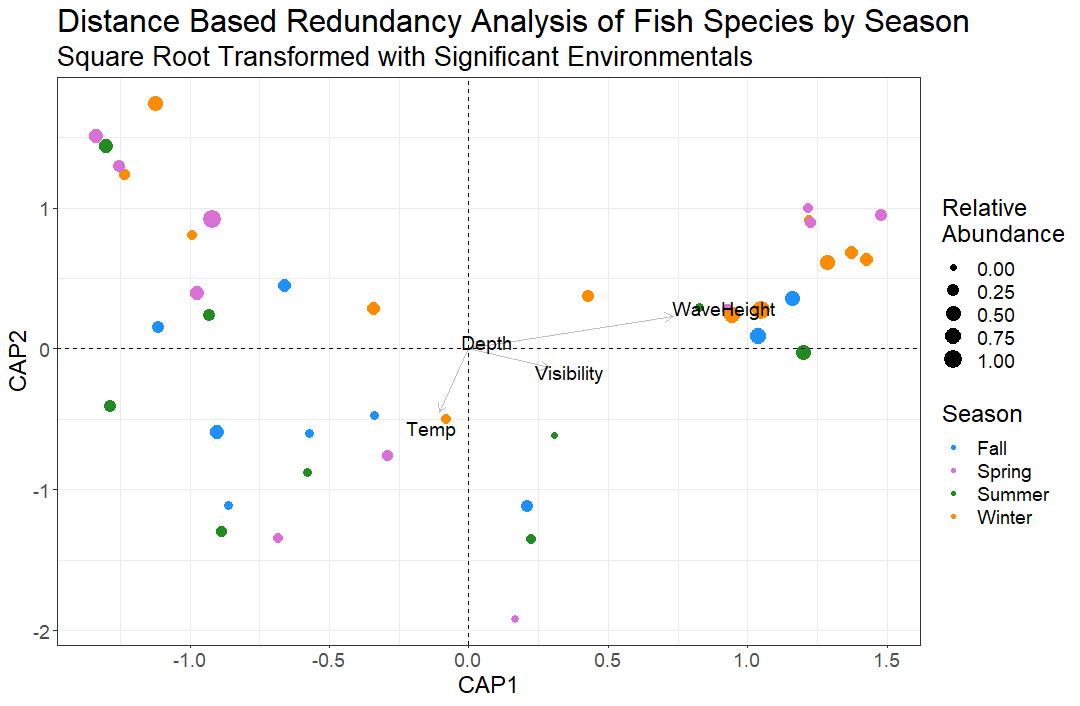
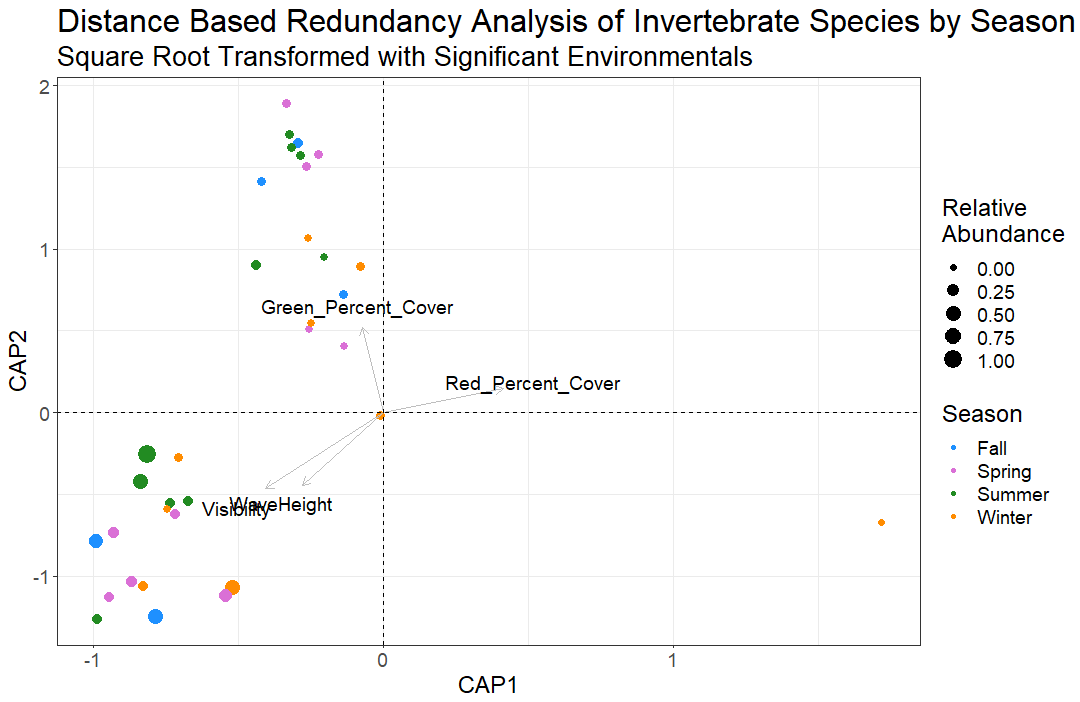
The environmental variables I investigated were the tide height while sampling, the average wind speed, salinity, depth of the BRUVS, water visibility, water temperature, wave height, wave period, and the percentage cover of red, brown, green, and seagrass algae separately. I also added in data for wind direction and wave direction by referencing NOAA buoys during the sampling days. Again I chose to analyze fish and invertebrates separately. To analyze the impact of the environmental variables on the surf zone assemblage, I chose to perform a distance-based redundancy analysis (dbRDA). The dbRDA uses a list of explanatory variables (in this case the environmental data) and looks at how they impact the response variables, the fish and invertebrate abundance data. The significant environmental variables (p < .05) impacting fish species were depth of the BRUVS, visibility, water temperature, and wave height. The most influential factor was wave height with species like the leopard shark, and then silver, walleye, calico, and barred surfperch being more common in larger waves. For invertebrate species, the significant environmental variables (p < 0.05) were again wave height and visibility but also the precent cover of both green and red algae. Species that were more common in larger waves and greater water visibility included Dungeness crabs, purple dwarf olive snails, and the Pacific sand crab. For both fish and invertebrates, wave height was the most influential variable. Surprisingly though there were some specie that preferred greater wave action.
As I previously mentioned, I'm still actively analyzing this data so it along with the code is not publicly available yet. With the completion and publication of my thesis, I'll make sure to share it through GitHub so stay tuned!
